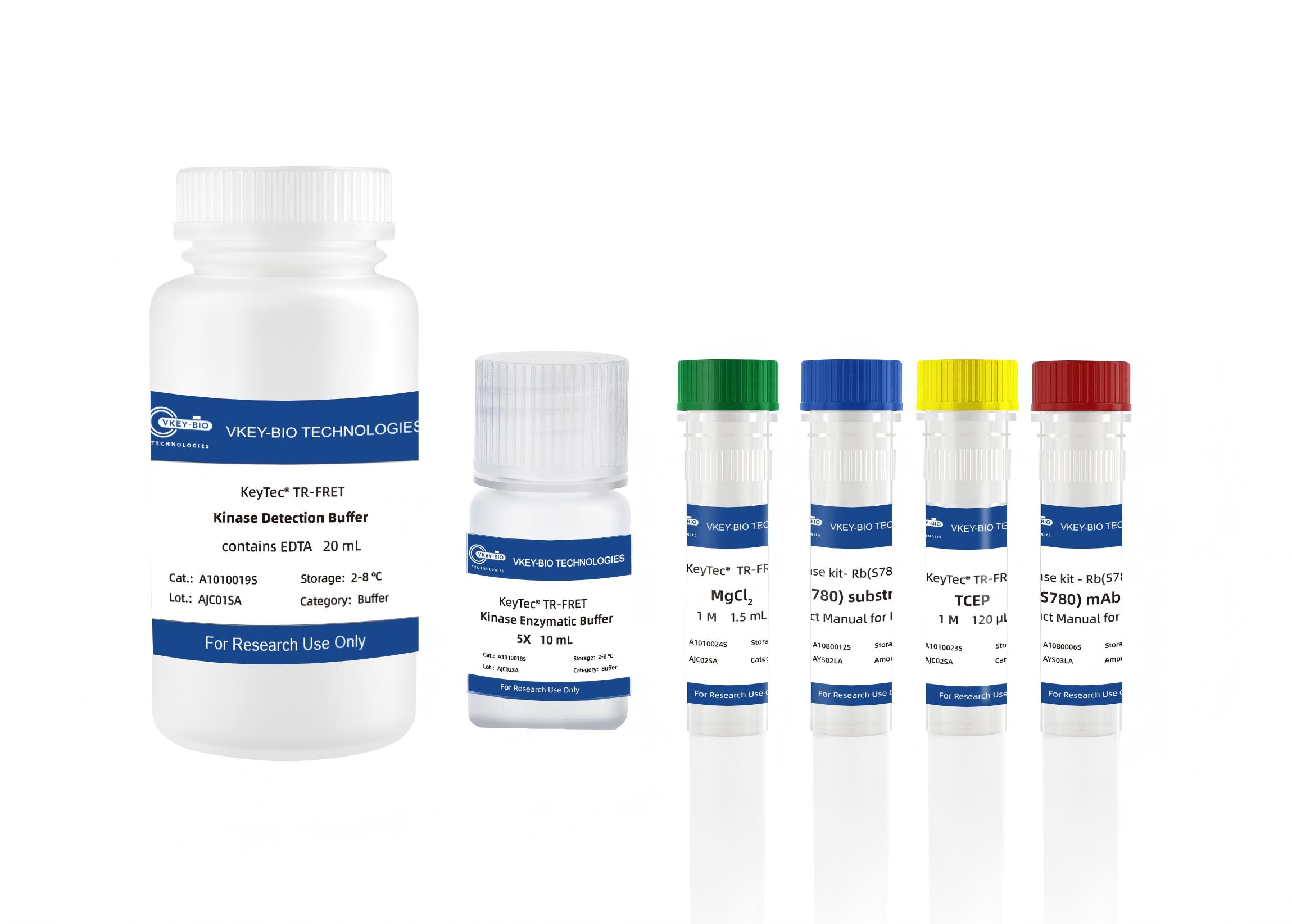
KeyTec® TR-FRET CDKs kinase kit - Rb(S780) substrate
Size: TR-FRET Assay for KINASE ACTIVITY Measurement of CDKs - Rb(S780) SUBSTRATE
Price: $ Inquire
CAT.: A1080006S

• Easy to Use: A homogeneous assay - just follow the 'add-incubate-measure' process
• CDK Activity Measurement via Phosphorylated Substrate Detection
• Flexible Profiling: From Individual Kinases to Full Kinase Panels
• Easy to Use: A homogeneous assay - just follow the 'add-incubate-measure' process
• CDK Activity Measurement via Phosphorylated Substrate Detection
• Flexible Profiling: From Individual Kinases to Full Kinase Panels
• Easy to Use: A homogeneous assay - just follow the 'add-incubate-measure' process
• CDK Activity Measurement via Phosphorylated Substrate Detection
• Flexible Profiling: From Individual Kinases to Full Kinase Panels
KeyTec® TR-FRET CDKs kinase kit is designed for measuring the cyclin-dependent kinases (CDKs) activity. The protien kinase family, which comprises multiple members such as CDK1, 3, 4, 6, 7, 9, 10, 12, 13, 15, 16, 17 and 18, is known to phosphorylate serine 780 (S780) of the retinoblastoma-associated protein (Rb). The assay kit provides a CDKs-specific substrate labeled with KeyTec® TR-FRET LA*1 , a phospho-specific antibody labeled with KeyTec® TR-FRET Solar Eu*2 and detection reagent. These components enable the quantification of kinase activity by detecting the phosphorylated substrate.
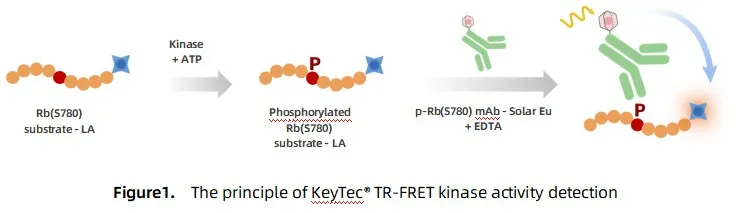
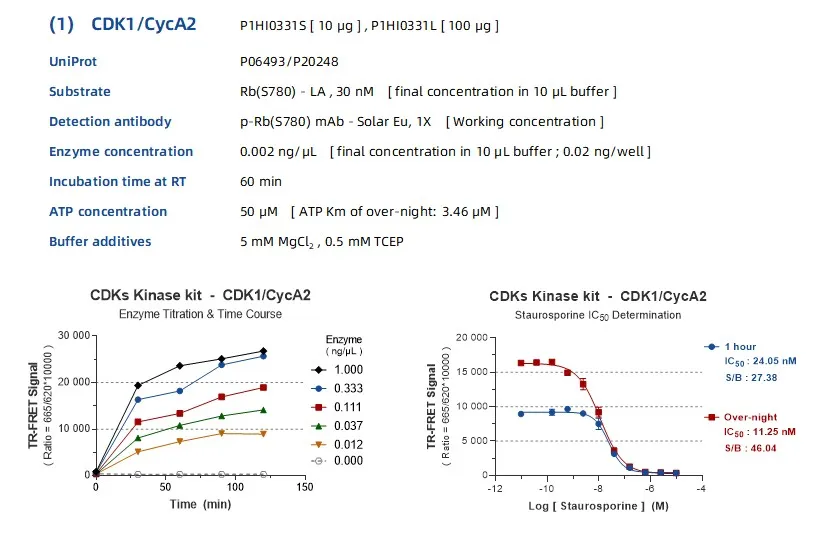
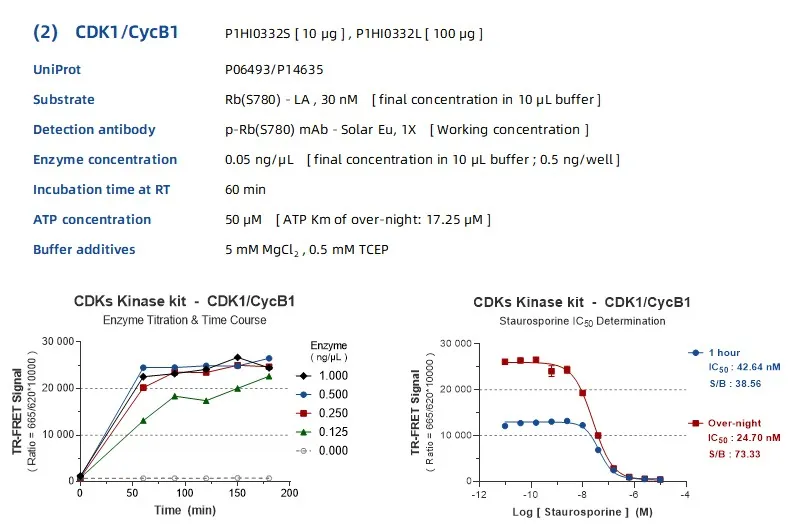
This assay is based on a sandwich immunoassay method using KeyTec® TR-FRET technology, offering a simple, rapid, highly specific and sensitive, as well as reproducible detection process. The principle, outlined in Figure 1, involves two main phases:
Kinase Reaction: The specific substrate is phosphorylated by the target kinase in the optimized reaction buffer with ATP.
TR-FRET Detection: Adding an antibody containing EDTA (to terminate the kinase reaction) that specifically binds to the phosphorylation site. This binding brings the TR-FRET donor and acceptor into close proximity, enabling resonance energy transfer (RET) upon excitation and generating a TR-FRET signal. The intensity of TR-FRET signal is directly proportional to the level of phosphorylated substrate.
*1 KeyTec® TR-FRET LA: TR-FRET Acceptor
*2 KeyTec® TR-FRET Solar Eu: TR-FRET Donor
| CAT. | Description | Size |
| A1080006S | KeyTec® TR-FRET CDKs kinase kit - Rb(S780) substrate | 1,000 tests |
|
The tests are sufficient in a 384-well microplate assay format, with 20 μL per well. |
||
| Certificate of Analysis | Limitations | Storage Conditions |
| LOT. | For research use only |

2-8 ℃ |
KeyTec® TR-FRET CDKs kinase kit is designed for measuring the cyclin-dependent kinases (CDKs) activity. The protien kinase family, which comprises multiple members such as CDK1, 3, 4, 6, 7, 9, 10, 12, 13, 15, 16, 17 and 18, is known to phosphorylate serine 780 (S780) of the retinoblastoma-associated protein (Rb). The assay kit provides a CDKs-specific substrate labeled with KeyTec® TR-FRET LA*1 , a phospho-specific antibody labeled with KeyTec® TR-FRET Solar Eu*2 and detection reagent. These components enable the quantification of kinase activity by detecting the phosphorylated substrate.
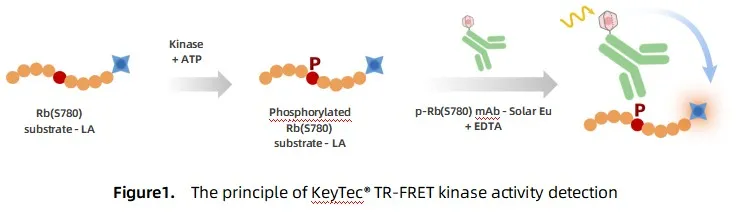
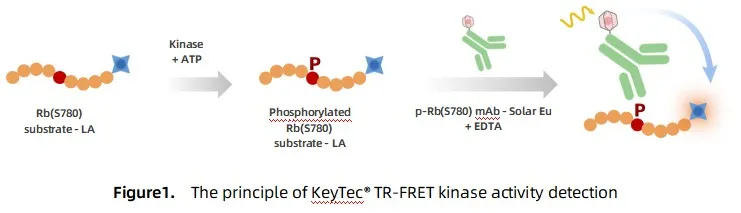
This assay is based on a sandwich immunoassay method using KeyTec® TR-FRET technology, offering a simple, rapid, highly specific and sensitive, as well as reproducible detection process. The principle, outlined in Figure 1, involves two main phases:
Kinase Reaction: The specific substrate is phosphorylated by the target kinase in the optimized reaction buffer with ATP.
TR-FRET Detection: Adding an antibody containing EDTA (to terminate the kinase reaction) that specifically binds to the phosphorylation site. This binding brings the TR-FRET donor and acceptor into close proximity, enabling resonance energy transfer (RET) upon excitation and generating a TR-FRET signal. The intensity of TR-FRET signal is directly proportional to the level of phosphorylated substrate.
*1 KeyTec® TR-FRET LA: TR-FRET Acceptor
*2 KeyTec® TR-FRET Solar Eu: TR-FRET Donor
| CAT. | Description | Size |
| A1080006L | KeyTec® TR-FRET CDKs kinase kit - Rb(S780) substrate | 20,000 tests |
|
The tests are sufficient in a 384-well microplate assay format, with 20 μL per well. |
||
| Certificate of Analysis | Limitations | Storage Conditions |
| LOT. | For research use only |

2-8 ℃ |
KeyTec® TR-FRET CDKs kinase kit is designed for measuring the cyclin-dependent kinases (CDKs) activity. The protien kinase family, which comprises multiple members such as CDK1, 3, 4, 6, 7, 9, 10, 12, 13, 15, 16, 17 and 18, is known to phosphorylate serine 780 (S780) of the retinoblastoma-associated protein (Rb). The assay kit provides a CDKs-specific substrate labeled with KeyTec® TR-FRET LA*1 , a phospho-specific antibody labeled with KeyTec® TR-FRET Solar Eu*2 and detection reagent. These components enable the quantification of kinase activity by detecting the phosphorylated substrate.
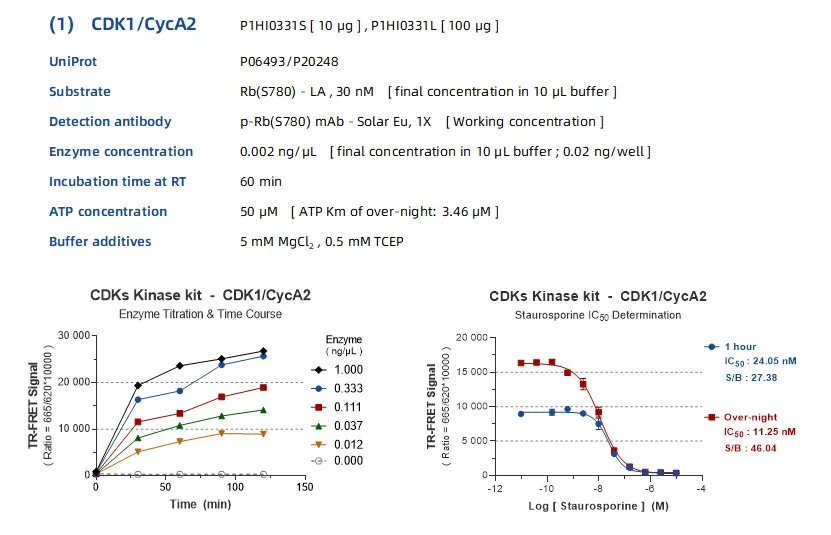
This assay is based on a sandwich immunoassay method using KeyTec® TR-FRET technology, offering a simple, rapid, highly specific and sensitive, as well as reproducible detection process. The principle, outlined in Figure 1, involves two main phases:
Kinase Reaction: The specific substrate is phosphorylated by the target kinase in the optimized reaction buffer with ATP.
TR-FRET Detection: Adding an antibody containing EDTA (to terminate the kinase reaction) that specifically binds to the phosphorylation site. This binding brings the TR-FRET donor and acceptor into close proximity, enabling resonance energy transfer (RET) upon excitation and generating a TR-FRET signal. The intensity of TR-FRET signal is directly proportional to the level of phosphorylated substrate.
*1 KeyTec® TR-FRET LA: TR-FRET Acceptor
*2 KeyTec® TR-FRET Solar Eu: TR-FRET Donor
| CAT. | Description | Size |
| A1080006B | KeyTec® TR-FRET CDKs kinase kit - Rb(S780) substrate | 100,000 tests |
|
The tests are sufficient in a 384-well microplate assay format, with 20 μL per well. |
||
| Certificate of Analysis | Limitations | Storage Conditions |
| LOT. | For research use only |
2-8 ℃ |


 English