The cyclic GMP-AMP synthase (cGAS)–stimulator of interferon genes (STING) signaling pathway is a cytosolic DNA-sensing pathway that plays a crucial role in innate immune responses. When cGAS recognizes exogenous DNA from pathogens or endogenous DNA (e.g., mtDNA) released due to cellular damage, it catalyzes the formation of the second messenger 2'3'-cGAMP. Alternatively, bacterial infections can directly provide exogenous cyclic dinucleotides (CDNs). Both types of cyclic dinucleotide ligands specifically bind to the STING dimer on the endoplasmic reticulum, inducing its conformational rearrangement and subsequent translocation to the Golgi apparatus. Activated STING recruits TBK1 at the Golgi, and through the TBK1-IRF3 axis and the IKK-NF-κB pathway, it synergistically induces the release of type I interferons (IFN-I) and key pro-inflammatory cytokines such as IL-6 and TNF-α. This signaling cascade underscores the double-edged sword role of the STING pathway in immune homeostasis: it is both a key driver for initiating anti-tumor immunity, and its aberrant, persistent activation underlies the pathogenesis of autoimmune diseases like systemic lupus erythematosus (SLE).
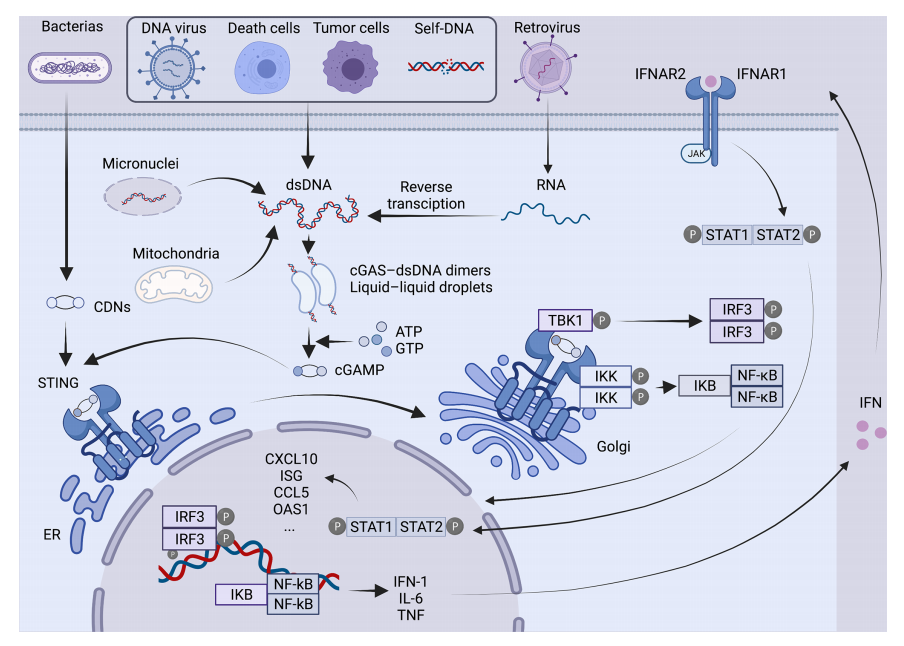
Figure 1. Schematic diagram of the cGAS-STING signaling pathway(Source: doi:10.3389/fimmu.2021.795401)
- In the oncology field, drug development is transitioning from first-generation cyclic dinucleotide drugs to non-nucleotide small molecule agonists, aiming to address poor membrane permeability and limited administration routes.
- For autoimmune diseases like SLE, the focus is on developing highly specific small molecule inhibitors to block excessive STING activation.
However, in the early stages of drug discovery, traditional methods like Western Blot or ELISA are limited by low throughput and cumbersome wash steps, struggling to meet the efficient R&D demands of CROs and pharmaceutical companies. To address this, VKEY-BIO, leveraging its independently developed TR-FRET (Time-Resolved Fluorescence Resonance Energy Transfer) technology platform, introduces the KeyTec® TR-FRET Human STING WT Binding Kit, designed to provide an efficient, stable, and sensitive detection tool for new drug R&D.
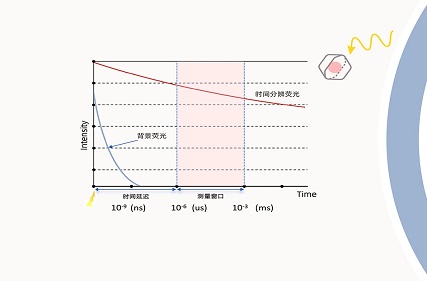
The KeyTec® TR-FRET Human STING WT Binding Kit is based on Time-Resolved Fluorescence Resonance Energy Transfer (TR-FRET) technology, targeting the human wild-type STING protein. An anti-Tag1 antibody conjugated to Bright Tb (donor) binds to the STING protein, while a STING ligand conjugated to Green (acceptor) is added simultaneously. When both simultaneously bind to STING, the donor-acceptor proximity enables energy transfer upon external excitation, generating a detectable fluorescence signal at 520 nm. If a test compound (agonist or inhibitor) competes with the fluorescent ligand for binding to the STING protein, the signal decreases proportionally to the compound's binding affinity, allowing quantitative detection of its binding activity to STING.
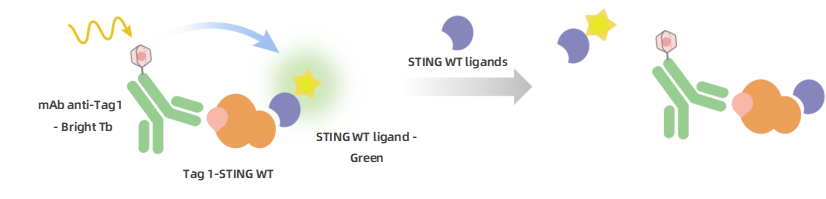
Figure 2. KeyTec® TR-FRET Human STING WT Protein Binding Assay Principle
- Homogeneous assay format, requiring no wash steps throughout the process, utilizing a "Mix-and-Read" protocol for extremely simple operation.
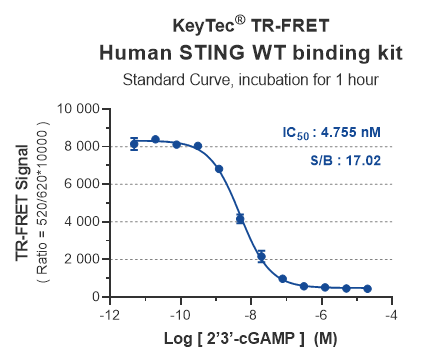
- Exceptionally low background signal with an excellent signal window (S/B > 17).
- Compatible with high-throughput screening systems from 96-well to 384-well and 1536-well plates.
- Stable signal, supporting flexible plate reading time windows (30 min to overnight incubation).
A gradient dilution test using the standard 2'3'-cGAMP shows a high standard curve fitting degree and low background interference.
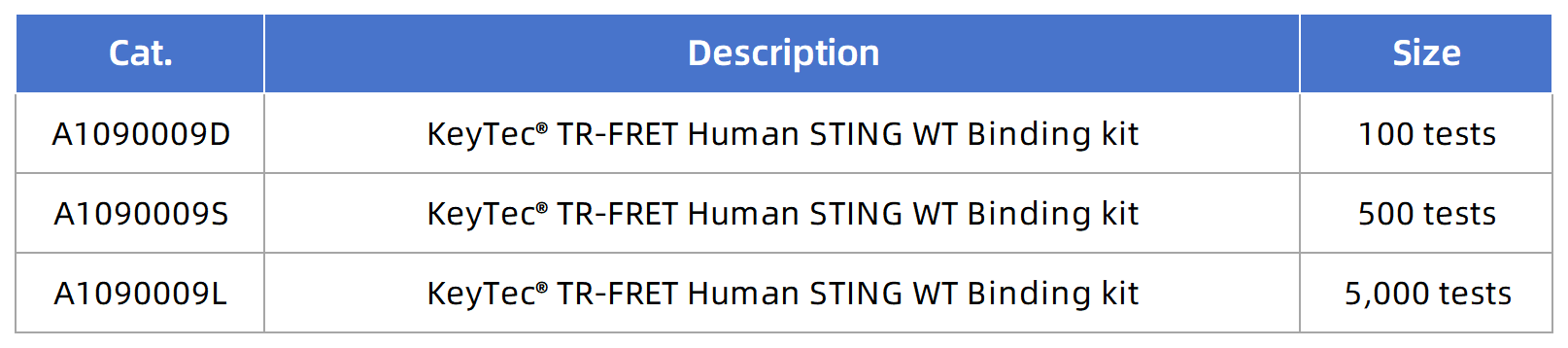
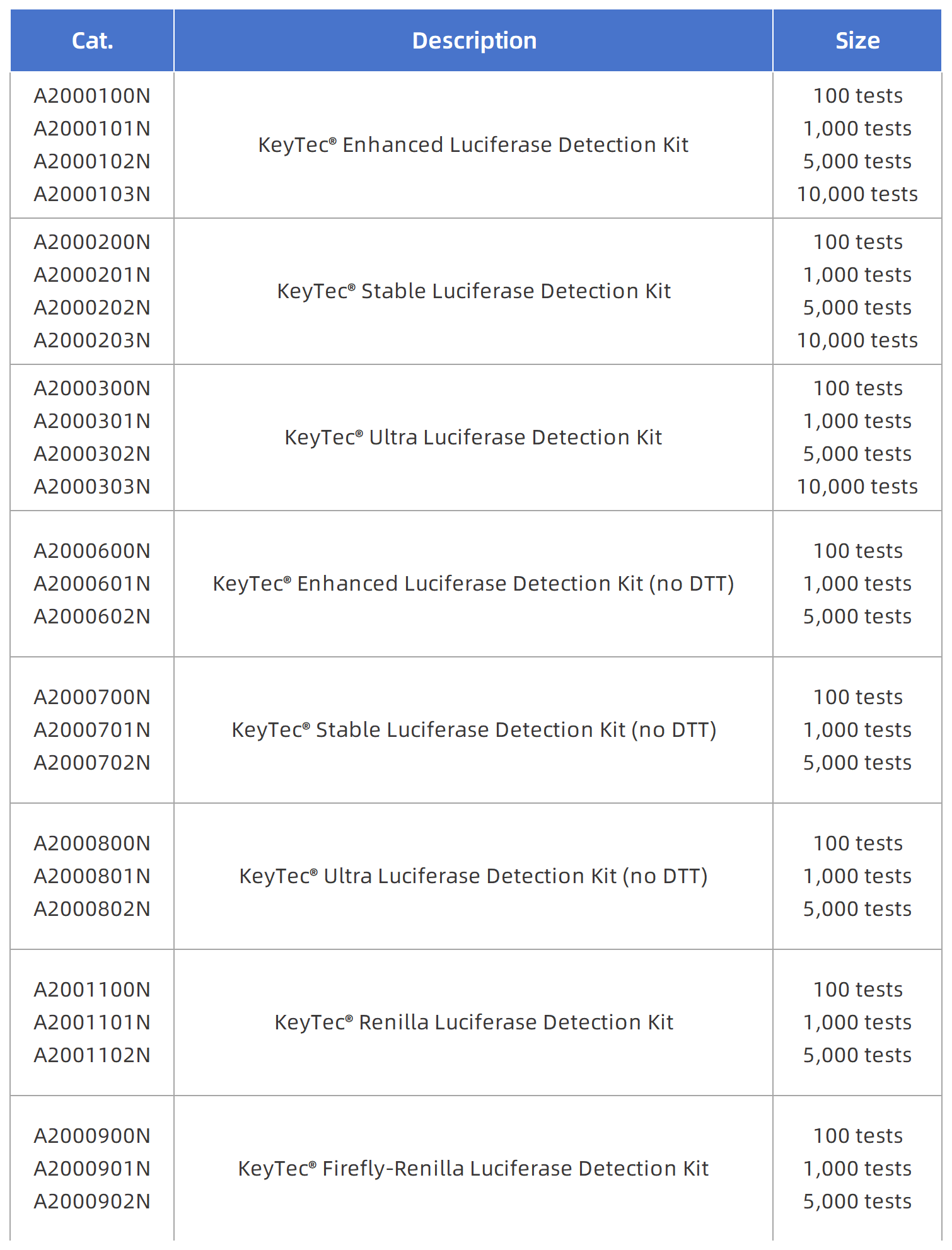
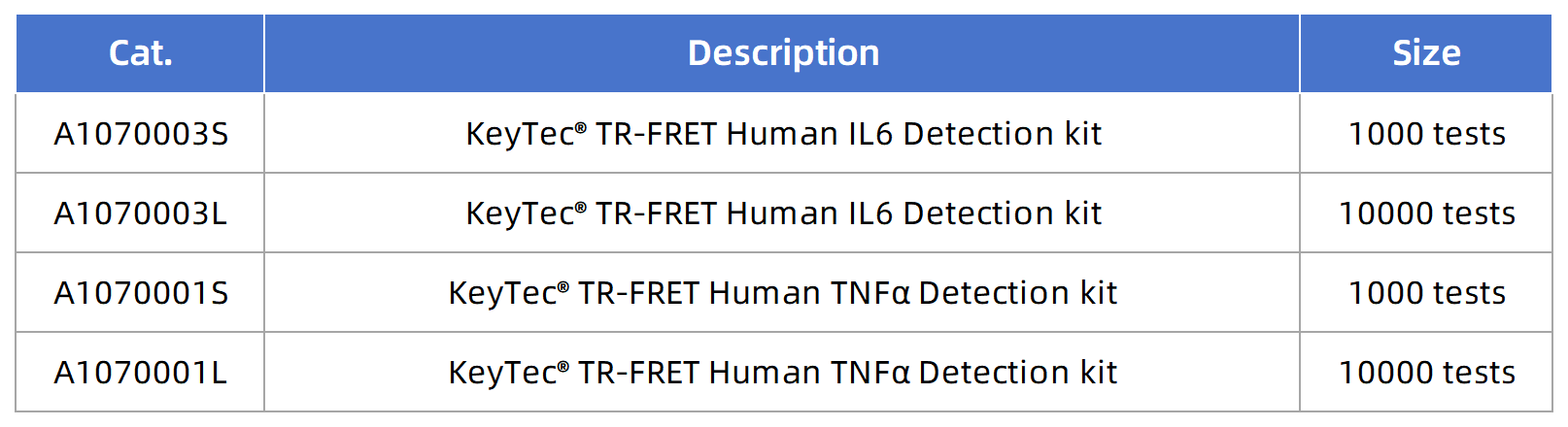
Drug activity assessment is a multi-dimensional process. STING pathway activation first triggers intracellular signal transduction, subsequently driving the release of key cytokines like IL-6 and TNF-α. VKEY-BIO simultaneously offers a highly sensitive luciferase detection system for intracellular signal analysis, along with downstream companion IL-6, TNF-α, and other cytokine detection kits, helping you build a comprehensive screening system from 'target validation' to 'phenotypic verification'.
1. Intracellular Signal Detection (Universal Luciferase Detection System)
2. Key Cytokine Detection

 English