Monoclonal antibodies (mAbs), as a class of precision-targeted immunoglobulins (Ig), consist of an antigen-binding region (F(ab')₂) and an effector function region (Fc). In terms of mechanism, the F(ab')₂ fragment achieves precise targeting by specifically recognizing antigens, while the Fc fragment mediates immune responses through mechanisms such as complement-dependent cytotoxicity (CDC) and Fc receptor binding, which triggers antibody-dependent cellular cytotoxicity (ADCC) or antibody-dependent cellular phagocytosis (ADCP).
The mammalian immune system comprises five Ig subtypes (IgM, IgG, IgA, IgD, and IgE). The Fc regions of these subtypes bind to different Fc receptors (see Table 1) to mediate immune responses. Among them, IgG has become the primary mAb drug in clinical applications due to its long half-life and excellent tissue penetration. To evaluate the activity and efficacy of these biologics, researchers often rely on specialized bioassay kits, which have been successfully applied in three major therapeutic areas:
① Immunotherapy for malignancies (e.g., solid tumors and hematologic cancers);
② Treatment of autoimmune diseases (including rheumatoid arthritis and multiple sclerosis);
③ Antiviral therapy (covering infections such as Ebola hemorrhagic fever and severe influenza).
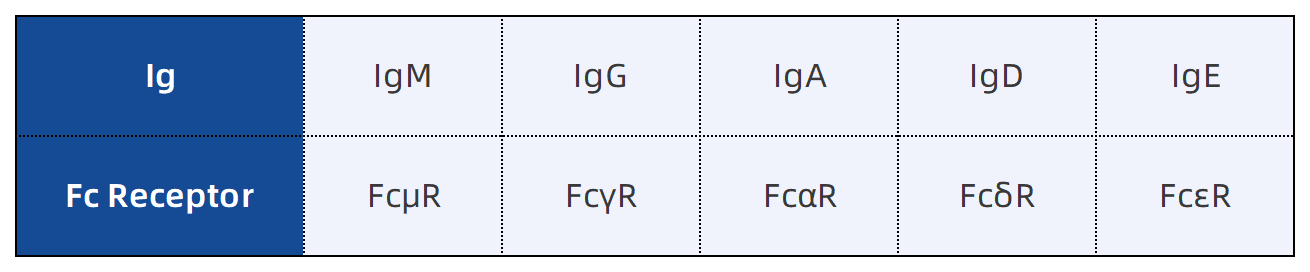
Table 1. Types of Fc Receptors
① Target Development Stage – Identifying therapeutic targets through omics screening and functional validation;
② Antibody Development Stage – Constructing candidate antibody molecules using hybridoma technology, phage display, or high-throughput single B-cell screening;
③ Engineering Optimization Stage – Humanization to reduce immunogenicity, affinity optimization, and Fc glycosylation modification to regulate effector functions;
④ Functional Validation Stage – Conducting preclinical evaluations through in vitro activity assays (e.g., ADCC/CDC analysis) and in vivo pharmacokinetic/pharmacodynamic studies.
Leveraging its proprietary TR-FRET (Time-Resolved Fluorescence Resonance Energy Transfer) technology platform, VKEY-BIO has developed a series of reagent kits covering the entire antibody development cycle:
✓ Antibody Screening Kits:
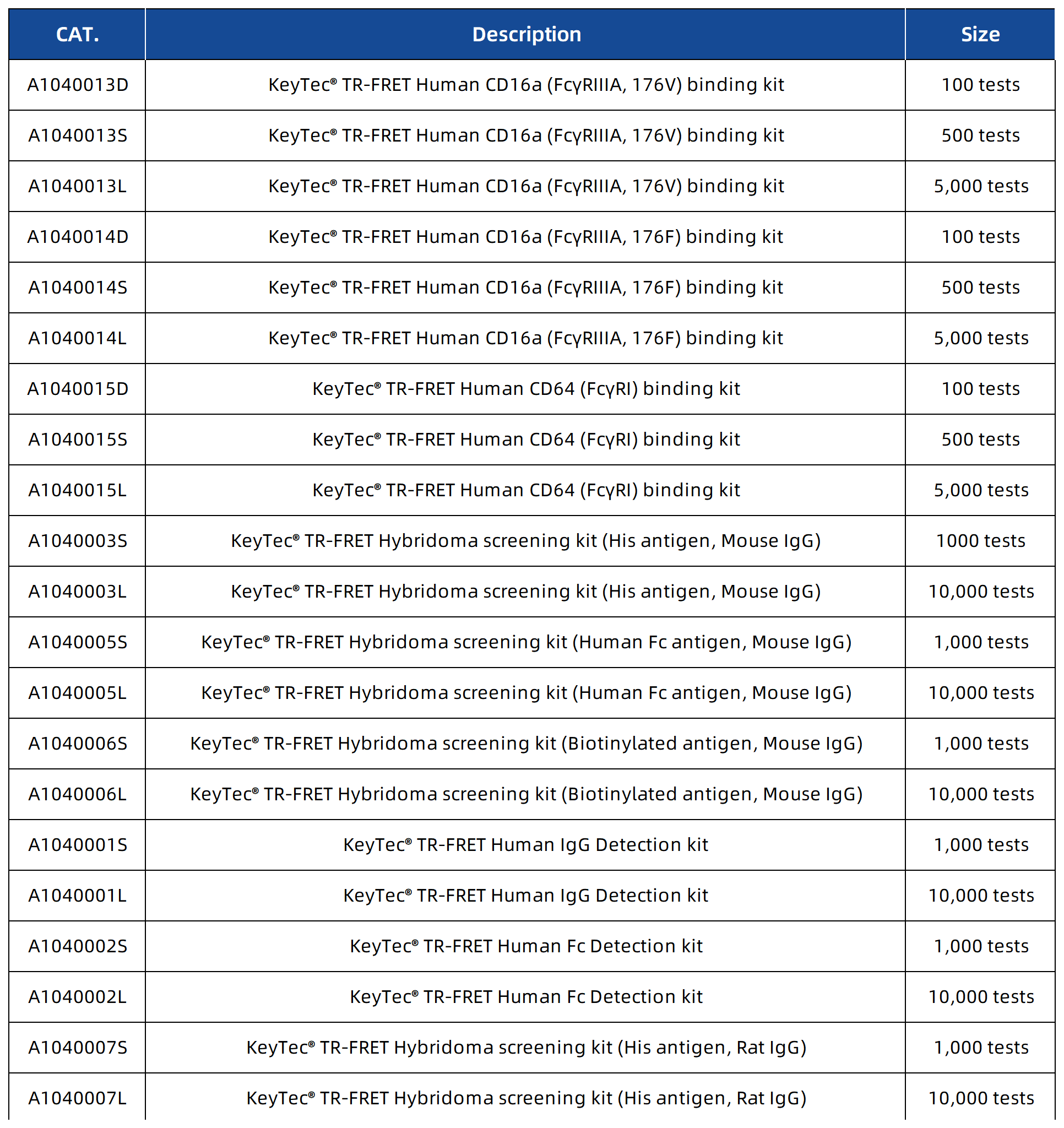
KeyTec® TR-FRET Hybridoma Screening Kit;
✓ Antibody Quantification Kits:
KeyTec® TR-FRET Human IgG Detection Kit;
KeyTec® TR-FRET Human Fc Detection Kit;
✓ Effector Function Analysis Kits: New Product Launch
KeyTec® TR-FRET Human CD16a (FcγRIIIA, 176V) Binding Kit;
KeyTec® TR-FRET Human CD16a (FcγRIIIA, 176F) Binding Kit;
KeyTec® TR-FRET Human CD64 (FcγRI) Binding Kit.
The human IgG Fc receptor (FcgR) family consists of six receptors: FcgRI/CD64, FcgRIIa/CD32a, FcgRIIb/CD32b, FcgRIIc/CD32c, FcgRIIIa/CD16a, and FcgRIIIb/CD16b (see Figure 1). Among them, FcgRI/CD64 (molecular weight ~72 kDa) is primarily expressed on macrophages, monocytes, and dendritic cells, mediating ADCP phagocytosis. FcgRIIIa/CD16a (molecular weight ~50-80 kDa) is mainly expressed on NK cells, mediating ADCC immune responses. Due to the complexity and high cost of primary cell experiments, as well as variability between cell sources, the binding of monoclonal antibody IgG to FcR-expressing stable cell lines or biochemical-level detection of FcR family members involved in ADCC/ADCP can be used to evaluate ADCC/ADCP functionality during the IgG development stage.
VKEY-BIO's effector function analysis kits—CD16a (FcγRIIIA, 176V) Binding Kit, CD16a (FcγRIIIA, 176F) Binding Kit, and CD64 (FcγRI) Binding Kit—enable biochemical-level evaluation of ADCC and ADCP functionality in antibody drug candidates.

Figure 1. Classification and functional diagram of the human FcR receptor family | Image source: https://mp.weixin.qq.com/s/1_LZYdr5FXwKquw10C_mrQ
The KeyTec® TR-FRET Solar Eu-conjugated anti-Tag1 antibody specifically recognizes CD16 or CD64 proteins labeled with Tag1. The KeyTec® TR-FRET LA-conjugated Human IgG binds to CD16 or CD64 proteins, bringing Solar Eu and LA into proximity. Under external light excitation, resonance energy transfer occurs between the donor and acceptor. The signal intensity at a specific wavelength (665 nm) reflects the binding affinity between CD16/CD64 and Human IgG. Free Human IgG or Human Fc-tagged proteins in the sample compete with Human IgG-LA for CD16/CD64 binding sites, resulting in an inverse relationship between TR-FRET signal intensity and the concentration of free Human IgG or Human Fc-tagged proteins. These interactions are precisely measured using a TR-FRET assay kit, enabling high-sensitivity and reproducible evaluation of antibody binding and effector function.

Figure 2. Schematic diagram of the detection principle
- Homogeneous reaction system with no washing steps; compatible dilution buffer; optimized for homogeneous time resolved fluorescence detection;
- Simple "add-mix-read" workflow;
- Low background and high signal-to-noise ratio (S/B > 10);
- Scalable from 96/384-well plates to high-throughput formats (e.g., 384-well shallow plates or 1536-well plates);
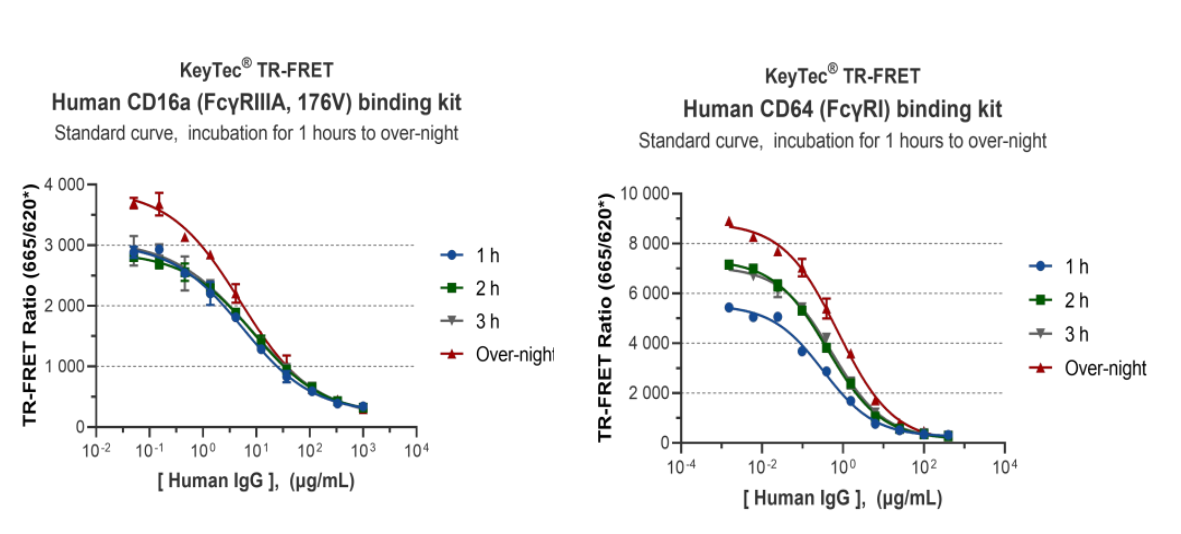
- Stable signals with flexible readout times (1-hour to overnight incubation).
Kit Performance Testing
Standard curve testing with gradient dilutions: low background signals (200–300) and high signal windows (>10).

hIgG Fc Affinity Testing
Competition assay between different hIgG Fc variants and LA-hIgG for CD16/CD64 binding: Affinity ranking: Fc-enhanced hIgG > hIgG1κ > hIgG.
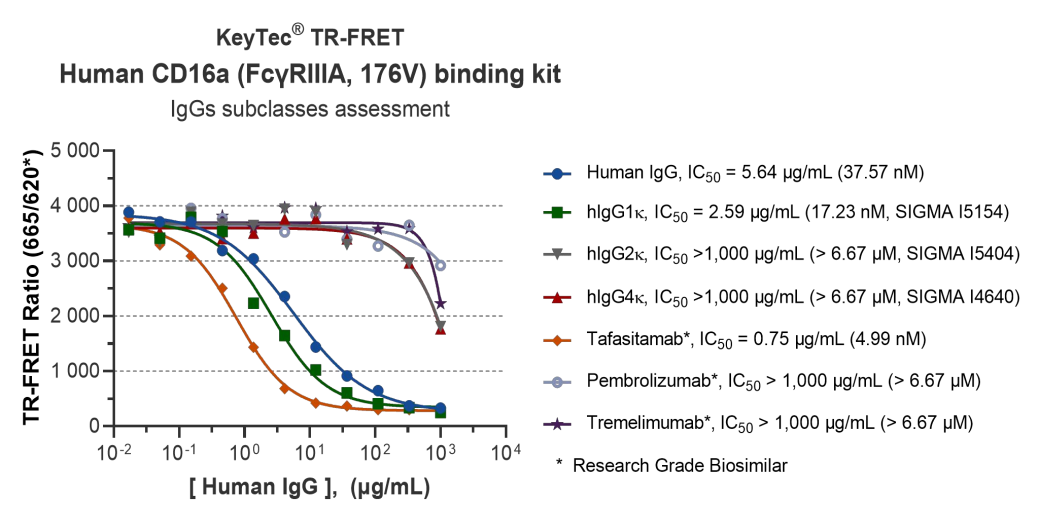
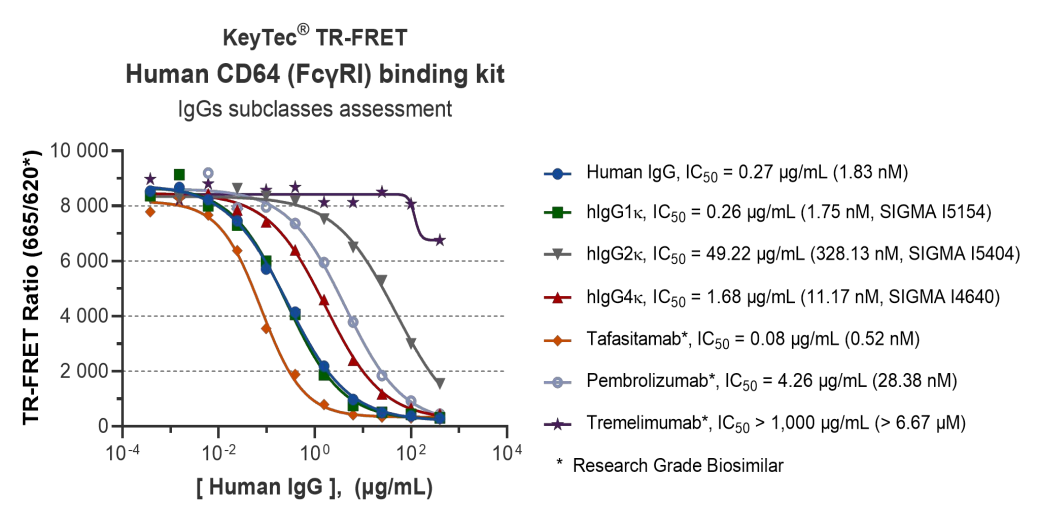
Incubation Time
Signal window under different incubation times: A 10-fold detection window is achieved after just 1 hour, significantly reducing experimental time and improving efficiency.
This article introduces VKEY-BIO's TR-FRET-based effector function analysis kits, including the CD16a (FcγRIIIA) and CD64 (FcγRI) binding kits, which provide efficient and precise solutions for evaluating ADCC/ADCP functionality in antibody drug development. With their homogeneous reaction system, high signal-to-noise ratio, and flexible workflow, these kits significantly enhance research efficiency. In the next article, we will delve into the KeyTec® TR-FRET Human FcRn Binding Kit, which focuses on antibody half-life evaluation and FcRn inhibitor screening, further expanding the toolkit for antibody pharmacokinetic studies.

 English