The SMARCA2 gene encodes a protein called BRM (or SNF2-alpha), which is one of the core catalytic subunits of the critical chromatin-remodeling complex (SWI/SNF complex) within cells. This gene and its encoded protein play vital roles in cellular life activities, primarily reflected in the following three aspects:
Core Function – The “Master Switch” of Gene Expression: SMARCA2 protein uses the energy from ATP to act like a “molecular motor,” moving nucleosomes around which DNA is wrapped, thereby altering the compact structure of chromatin. This process can “turn on” or “turn off” specific genes, regulating fundamental cellular activities such as growth, differentiation, and DNA repair. Its bromodomain and ATPase domain play key roles in chromatin remodeling and cellular regulation, making it an important target in cancer therapy.
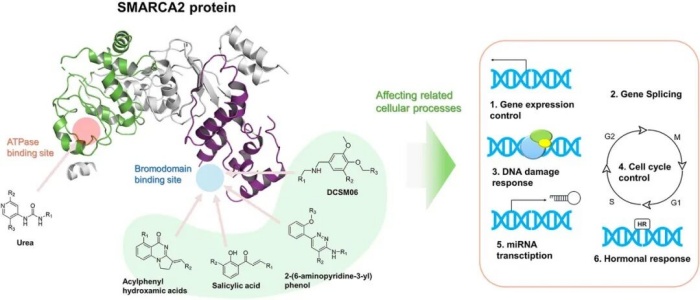
Figure 1. Schematic diagram of the SMARCA2 protein domain structure
(Source: DOI: 10.1016/j.ejmech.2025.117319)
Associated Diseases (Developmental Disorders): Pathogenic mutations in the SMARCA2 gene are the primary cause of Nicolaides-Baraitser syndrome (NCBRS). The main features of this rare disease include moderate-to-severe intellectual disability, speech delay, epilepsy, short stature, sparse hair, and distinctive facial features (such as a triangular face, long eyelashes, and a flat nasal bridge). Studies have also confirmed that SMARCA2 mutations cause neurodevelopmental disorders with NCBRS as the main phenotype; developmental delay and epilepsy are common features, and some patients also exhibit a distinctive coarse facial appearance and developmental malformations. Additionally, mutations in this gene are also associated with another extremely rare condition, “blepharophimosis-intellectual disability syndrome.”
Associated Diseases (Cancer Risk): Beyond rare genetic disorders, certain common variants (polymorphisms) of the SMARCA2 gene may increase cancer risk, particularly for smoking-related lung cancer and head and neck cancer. These variants reduce SMARCA2 protein expression, potentially impairing normal cell differentiation and thereby promoting tumorigenesis. More importantly, the synthetic lethal relationship between SMARCA2 and SMARCA4 makes SMARCA2 a potential precision therapeutic target for SMARCA4-mutant tumors – when SMARCA4 is inactivated, tumor cells become completely dependent on SMARCA2 function. Targeting SMARCA2 is considered a highly promising therapeutic strategy, and currently most related inhibitors are still in preclinical or early-stage clinical trials.
Given the central role of SMARCA2 in gene regulation and its importance in tumor development, small-molecule inhibitors and PROTAC degraders targeting SMARCA2 have become a frontier hotspot in current oncology drug development. However, selective modulation of SMARCA2 faces challenges such as highly conserved domains and complex protein-ligand interactions. Efficient and reliable ligand/inhibitor screening tools are therefore essential for accelerating drug discovery.
The KeyTec® TR-FRET Human SMARCA2 Binding Kit is a competitive immunoassay kit specifically designed for screening ligands or inhibitors of wild-type human SMARCA2 protein. Based on the KeyTec® TR-FRET technology platform, this kit features simple operation, high specificity, high sensitivity, and excellent reproducibility.
Solar Eu-conjugated anti-Tag1 antibody specifically recognizes Tag1-SMARCA2 protein, while HX-conjugated streptavidin (Streptavidin-HX) recognizes biotinylated Bromodomain Ligand. When SMARCA2 protein binds to the Bromodomain Ligand, Solar Eu and HX are brought into proximity; upon excitation by an external light source, energy resonance transfer occurs between the donor and acceptor. The binding level between the Bromodomain Ligand and SMARCA2 is determined by measuring the signal intensity at a specific wavelength (665 nm). In the absence of inhibitors or competing ligands, the signal is maximal; as the concentration of added inhibitor or ligand increases, the signal gradually decreases. The TR-FRET signal intensity is inversely proportional to the affinity of the inhibitor or ligand.
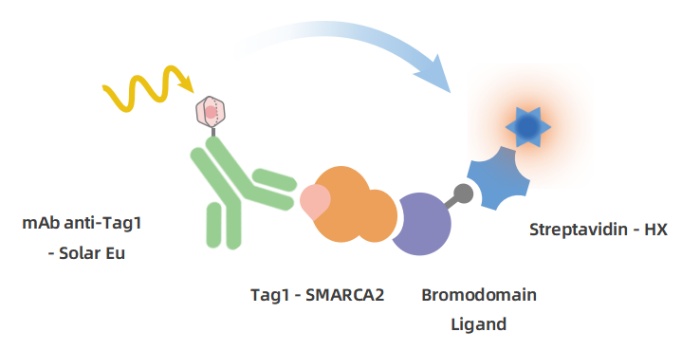
Figure 2. Schematic diagram of the KeyTec® TR-FRET Human SMARCA2 binding assay principle
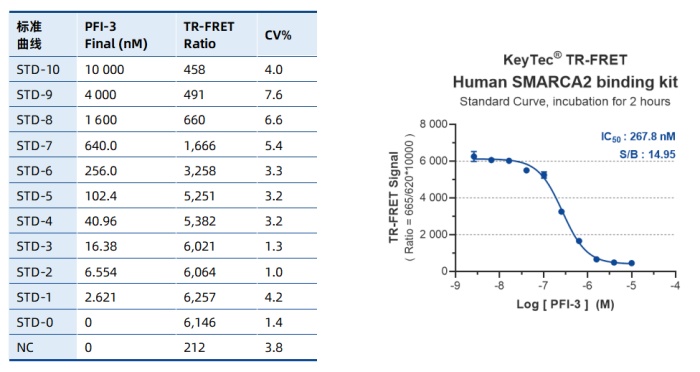
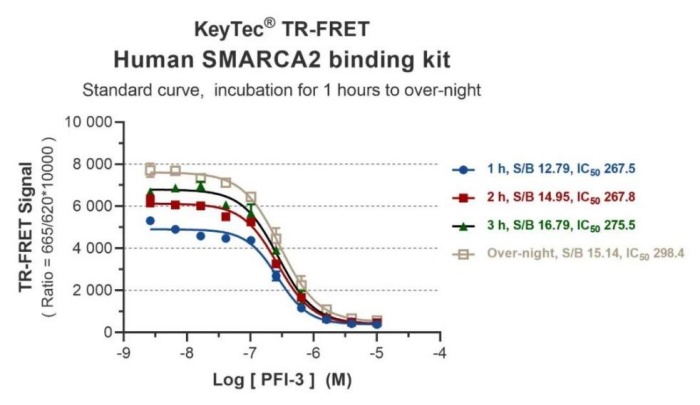
Standard Curve
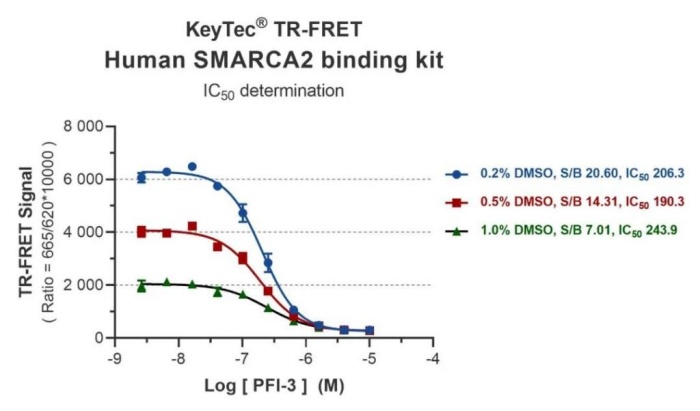
DMSO Tolerance Validation
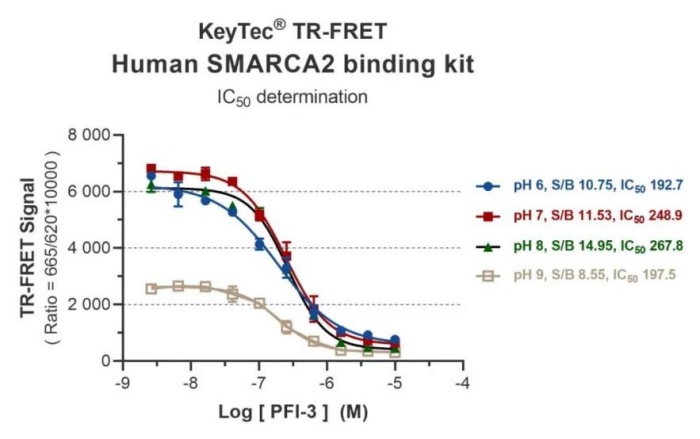
pH Optimization Validation
Different Incubation Time Test Results
High-throughput screening of SMARCA2 small-molecule inhibitors;
IC50/EC50 determination of SMARCA2 ligand affinity;
Binding activity assessment of SMARCA2 PROTAC degraders;
Differential screening of selective compounds for SMARCA2/SMARCA4;
Rapid validation of compound activity in SAR (structure-activity relationship) studies.

 English