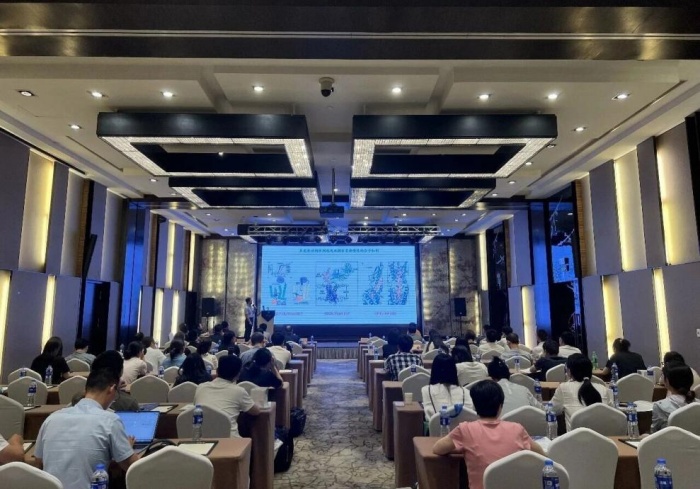
On July 24, 2026, the 2026 VKEY-BIO User Exchange Meeting was successfully held and concluded at the Boya Hotel in Shanghai. Centered around the theme "Frontier Dialogue: Exploring Future Trends in New Drug R&D," the meeting brought together experts in biopharmaceuticals, heads of drug discovery, and industry pioneers to focus on key steps in early-stage drug development-from target discovery and large-scale screening to indication expansion-and to engage in in-depth discussions on global trends and technological breakthroughs in next-generation drug R&D.
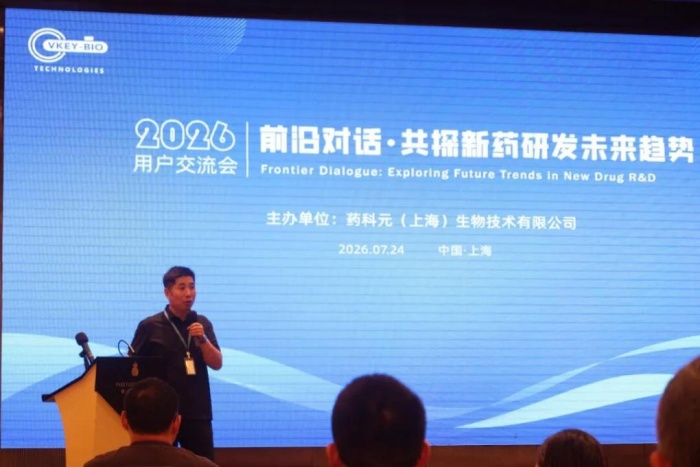
At the start of the meeting, Mr. Liu Shang, General Manager of VKEY-BIO, delivered the opening address. He first extended a warm welcome to all attendees and expressed his gratitude for their participation despite their busy schedules. Mr. Liu noted that he has witnessed the rapid development of the domestic drug R&D industry in recent years-from target discovery to screening technologies, from tools and methods to the industrial ecosystem. The scale and pace of change have been remarkable, and being part of this progress brings both pressure and motivation. He emphasized that VKEY-BIO’s growth would not have been possible without the opportunities provided by this era, as well as the continued trust and support of its customers and partners.
The exchange meeting featured four thematic presentations, with representatives from research institutes, multinational pharmaceutical companies, innovative biotech firms, and VKEY-BIO’s own team delivering professional content from four dimensions: basic research, industry practice, case studies, and product strategy.
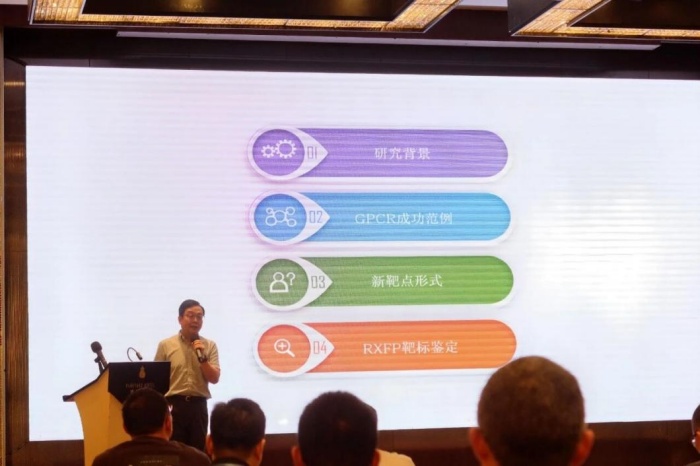
Yang Dehua | Shanghai Institute of Materia Medica, Chinese Academy of Sciences
Professor and Doctoral Supervisor at the Shanghai Institute of Materia Medica, Chinese Academy of Sciences; currently Party Branch Secretary for Drug Targets.
Professor Yang introduced the discovery and identification of new targets for metabolic diseases, starting from GPCR-related targets. The presentation was both insightful and accessible, covering the following key areas: research background and frontier advances in GPCRs, examples of drug development exemplified by GLP-1 receptor agonists, the potential value of orphan receptors GPR75 and GPR35, exploration of novel target modalities, and identification strategies for the RXFP target.
The report sparked lively discussion, particularly on the selectivity between Gs and Gi pathways in GPCR targets. Professor Yang pointed out that Gs and Gi are not simply an "either/or" choice in vivo, but involve a finely tuned balancing mechanism. He stressed that a deep understanding of the complex signaling network of a given target, combined with comprehensive consideration of its biological function, disease pathology, mechanism of action, and compatibility with screening platforms, is the key prerequisite for making optimal target decisions.
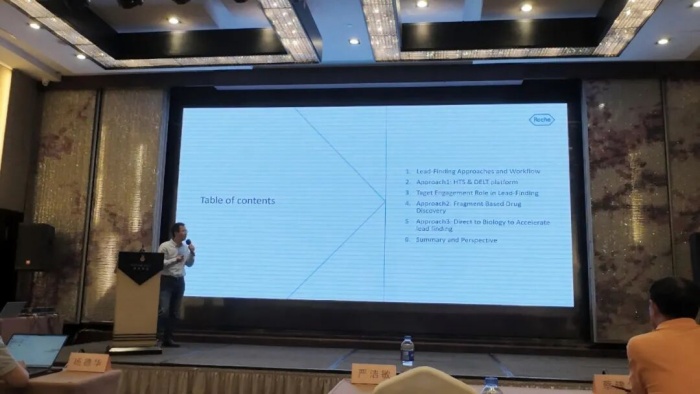
Lin Zhaohu | Roche Innovation Center Shanghai
Ph.D. from Fudan University; 18 years of experience in drug discovery at Roche; currently Head of the Fully Automated High-Throughput Drug Screening Department at Roche.
Dr. Lin systematically introduced the methods and workflows for lead compound discovery, comparing the advantages and disadvantages of multiple development platforms and their corresponding detection methods. These included high-throughput screening (HTS) and DNA-encoded chemical library (DEL) platforms (covering photochemical analysis, biophysical analysis, and target binding assays), fragment-based drug discovery (FBDD) platforms, and Direct-to-Biology platforms.
In response to a question about discrepancies among positive compounds identified by different analytical methods, Dr. Lin noted that each method is subject to varying degrees of interference from other factors in the reaction system, such as compound residues and catalyst effects. Therefore, comprehensive consideration is needed when interpreting data and cross‑validating results.
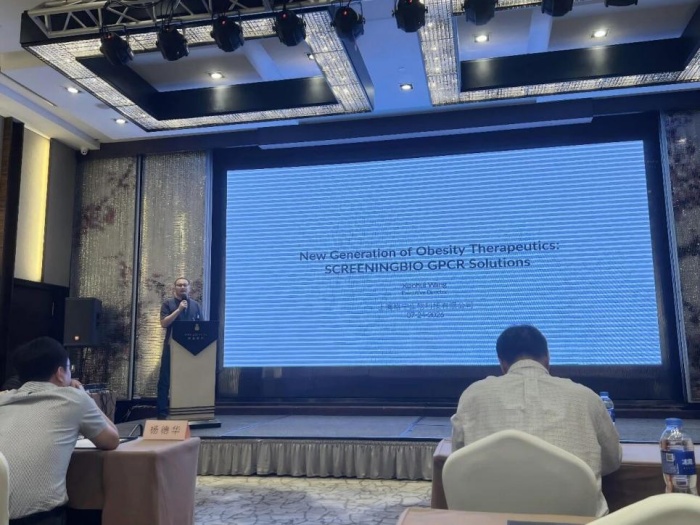
Wang Xiaohui | screeningbio
Former Director of the R&D Department at WuXi AppTec / Huiyuan Biotechnology (Shanghai) Co., Ltd. (a WuXi AppTec subsidiary); currently Vice President of R&D at screeningbio.
Mr. Wang used an obesity drug pipeline as a case study to review the entire process of GPCR-targeted drug development, from target validation to screening model establishment. The project established multi-species cell platforms around key targets such as GLP-1R, GIPR, and GCGR, and assessed the pharmacodynamic profiles of candidate molecules through cross-species data comparison. To address the low expression efficiency of AMY family heterodimers, the team optimized the host cell background. For the emerging target GPR75, the team tested multiple detection systems and compared the signal windows and signal-to-noise ratios of different readouts. In his summary, Mr. Wang noted that the greatest challenge in developing such targets lies in establishing screening models that truly reflect physiological states – a judgment that must be repeatedly validated with data.
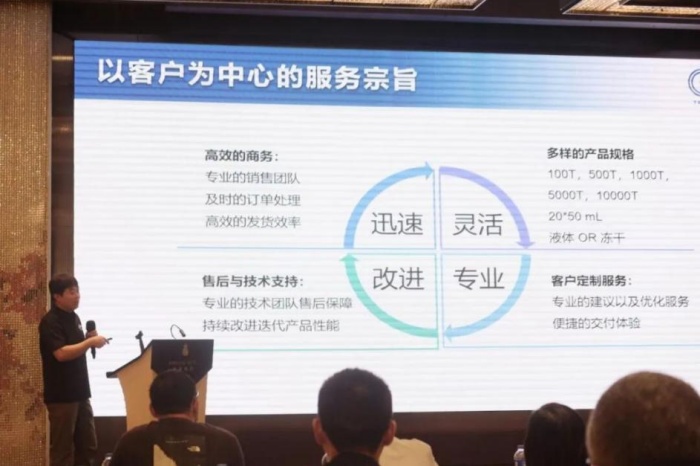
Zhang Junyi | VKEY-BIO (Shanghai) Biotechnology Co., Ltd.
Deputy General Manager of VKEY-BIO, shared how the company continuously refines reagent products tailored to R&D scenarios through meticulous attention to detail, drawing on its accumulated practical experience in the upstream reagent field for new drug development.
Since its inception, VKEY-BIO has focused on the independent R&D of high-end detection reagents, successively launching lanthanide fluorescent molecules such as Solar Eu and Bright Tb. To date, the company has developed six fluorescent molecules with distinct characteristics in terms of fluorescence intensity, water solubility, pH tolerance, and other properties, allowing flexible selection based on different application scenarios.
In the case study section, Mr. Zhang raised an unavoidable issue in reagent development: when no competitor reference is available, how do you define the performance ceiling of a product? Using the development of the SMARCA2 TR-FRET detection kit as an example, he described how the team, after meeting the client’s clearly defined specifications, continued to explore avenues for performance improvement. Another case focused on bispecific antibody content detection. The client’s initial proposal had issues with ambiguous signal attribution; the VKEY-BIO team re-analyzed the detection principle and designed a new approach that effectively resolved the challenge of distinguishing homodimers from heterodimers.
In his concluding remarks, Mr. Zhang emphasized that many seemingly minor variables in reagent development can significantly affect final data. He believes that establishing a standard system is the foundation of product development-from instrument calibration and solution preparation protocols to systematic error control-every step must be based on clear guidelines. At the same time, the team’s rigor and careful observation during experimental operations are the key to ensuring that these standards are properly implemented.
This User Exchange Meeting was not only a forum for cutting-edge ideas in new drug R&D, but also an important opportunity for VKEY-BIO to listen to customer needs and connect with industry partners. Looking ahead, VKEY-BIO will continue to deepen its presence in the upstream biological reagent sector for new drug development, closely follow global trends in drug R&D technologies, refine its products and technical services to better meet the actual needs of domestic pharmaceutical companies and research institutions, and consistently build high‑quality industry exchange platforms. Together with its peers, VKEY-BIO is committed to supporting the high-quality development of China’s innovative pharmaceutical industry.

 English