Transcriptional enhancers are short regulatory DNA elements that recruit BRD4, RNA polymerase II (RNA Pol II), transcription factors, and coregulators to enhance transcription of nearby genes by forming longdistance loop structures with promoters (Figure 1A). Superenhancers are composed of clusters of enhancers spanning large genomic regions and are typically an order of magnitude larger than typical enhancers. Superenhancers bind large amounts of BRD4, which in turn recruits the Mediator complex-a complex that serves as a bridge connecting transcription factors at superenhancers with RNA polymerase II at gene promoters (Figure 1B). In multiple cancer types, superenhancers and BRD4 play critical roles in transcriptional activation of oncogenes, overexpression, malignant transformation, cancer cell proliferation and survival, as well as tumor initiation, progression, and metastasis.
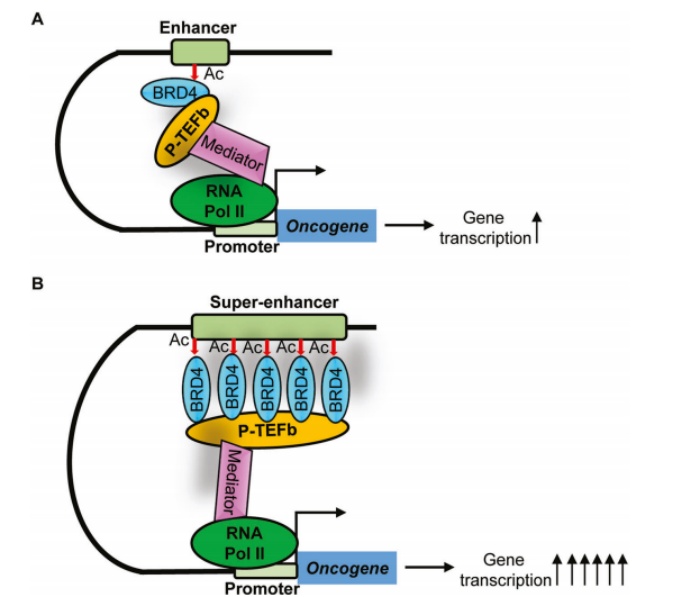
Figure 1. Transcriptional enhancers and superenhancers activate gene transcription
BRD4 is a member of the bromodomain and extraterminal domain (BET) protein family. By recognizing, binding to, and activating superenhancers, it significantly upregulates the expression of superenhancerassociated oncogenes. To date, inhibitors targeting the BRD4 BD1 and BD2 bromodomains have been discovered through smallmolecule compound library screening, computeraided virtual screening, and chemical synthesis. BRD4 inhibitors block communication between superenhancers and promoters, thereby suppressing oncogene transcription and expression in cancers of various organ origins, reducing cancer cell proliferation and survival, and inhibiting tumor progression (Figure 2). However, similar to other targeted therapies, the anticancer efficacy of BRD4 inhibitor monotherapy is limited. Preclinical studies have demonstrated synergistic anticancer effects when BRD4 inhibitors are combined with other anticancer agents such as CDK7 inhibitors, CDK4/CDK6 inhibitors, HDAC inhibitors, and BCL2 inhibitors, both in vitro and in mouse models of various cancers.
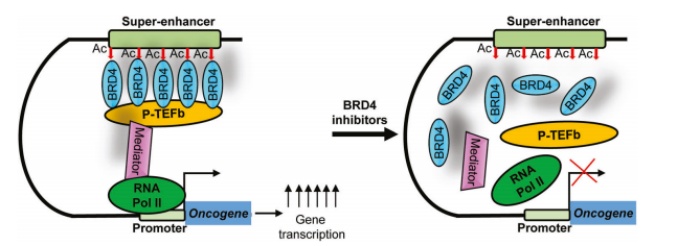
Figure 2. BRD4 inhibitors suppress oncogene transcription and expression
To date, more than ten BRD4 BD1 and BD2 bromodomain inhibitors (e.g., OTX015) have entered clinical trials for the treatment of cancers from various organ origins. However, clinical studies have shown that some of these drugs have significant side effects, with common adverse events including thrombocytopenia, dysgeusia, diarrhea, fatigue, nausea, and anemia (Figure 3). To address these limitations, researchers have recently developed BRD4 BD2 selective inhibitors, PROTAC BRD4 degraders, and dual BRD4/CBP/p300 bromodomain coinhibitors. Preclinical evaluations indicate that these novel strategies exhibit improved safety profiles while enhancing anticancer activity.
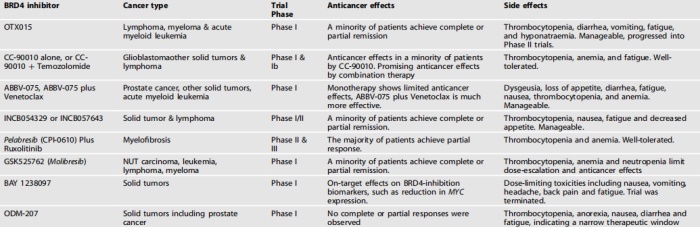
Figure 3. BRD4 BD1 and BD2 bromodomain inhibitors in clinical trials
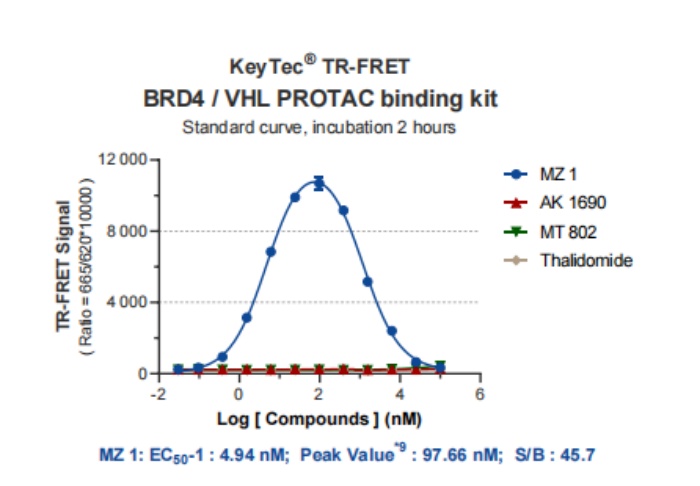
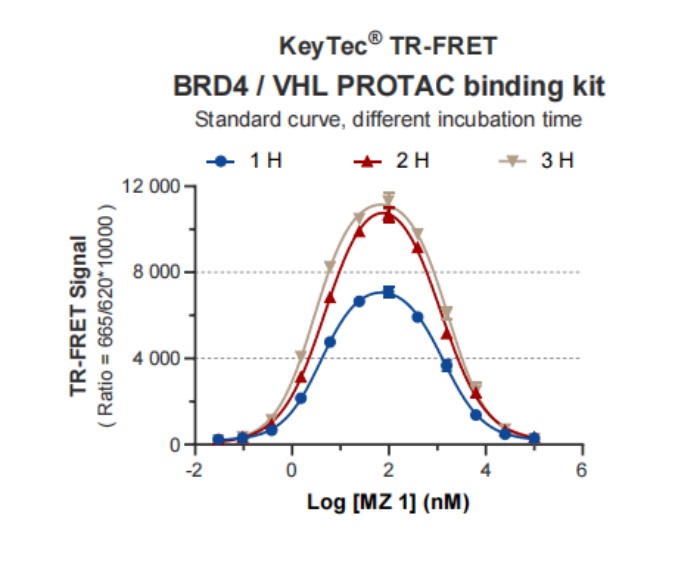
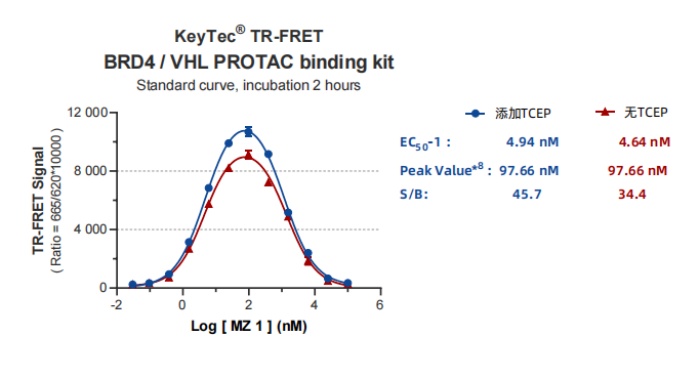
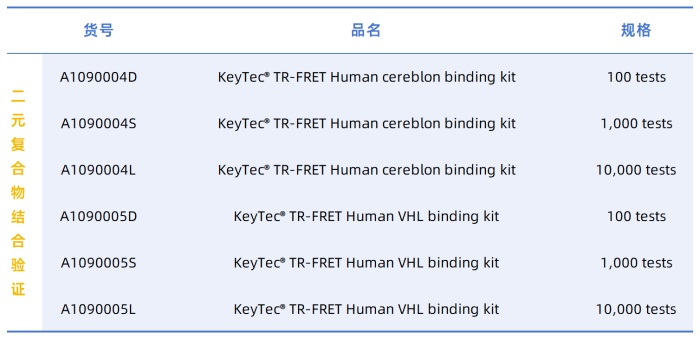
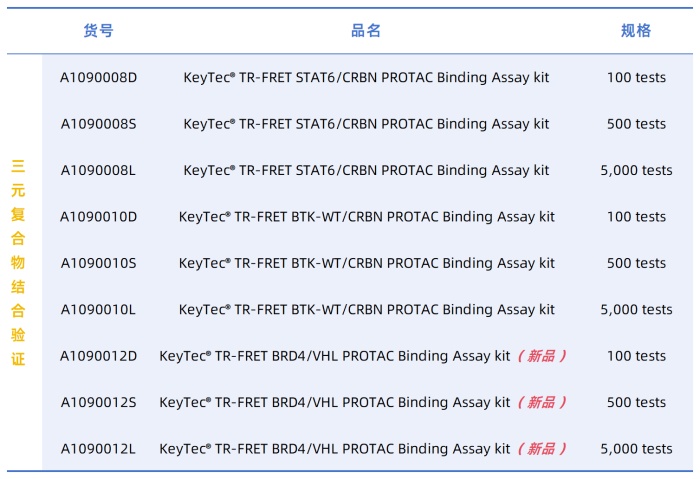
Leveraging its proprietary KeyTec® TR-FRET technology, VKEY-BIO has launched the KeyTec® TR-FRET BRD4/VHL PROTAC Binding Assay Kit, which can be used to screen PROTAC molecules that mediate the formation of a ternary complex between BRD4 protein and the VCB protein complex (VHL/Elongin C/Elongin B protein complex). The kit features simplicity, high accuracy, and excellent reproducibility.
The KeyTec® TR-FRET Solar Euconjugated anti-Tag1 antibody specifically recognizes the Tag1-VCB Complex protein, while the KeyTec® TR-FRET LAconjugated anti-Tag2 antibody specifically recognizes the Tag2-BRD4 protein. In the presence of the positive control PROTAC molecule MZ1, the Tag1-VCB Complex protein and Tag2-BRD4 protein are brought together to form a ternary complex, bringing Solar Eu and LA into proximity. Upon excitation by an external light source, energy resonance transfer occurs between the donor and acceptor (Figure 4). The extent of PROTAC mediated binding between BRD4 and the VCB Complex is determined by measuring the signal intensity at a specific wavelength (665 nm).
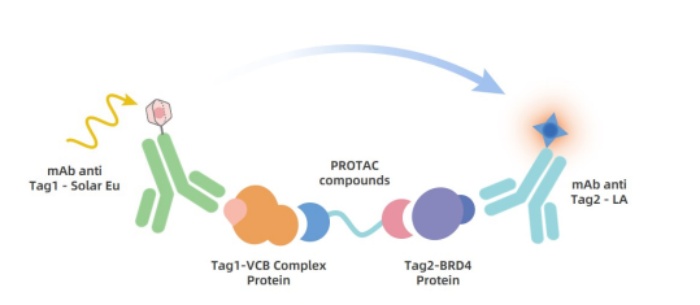
Figure 4. Schematic diagram of the BRD4/VHL PROTAC binding assay principle
MZ1 is the first reported PROTAC molecule capable of selectively degrading BRD4. It links the BRD4 targeting JQ1 molecule and the VHL targeting ligand through a flexible linker to form a ternary complex.

 English